MOW. TIDY. CLEAR.
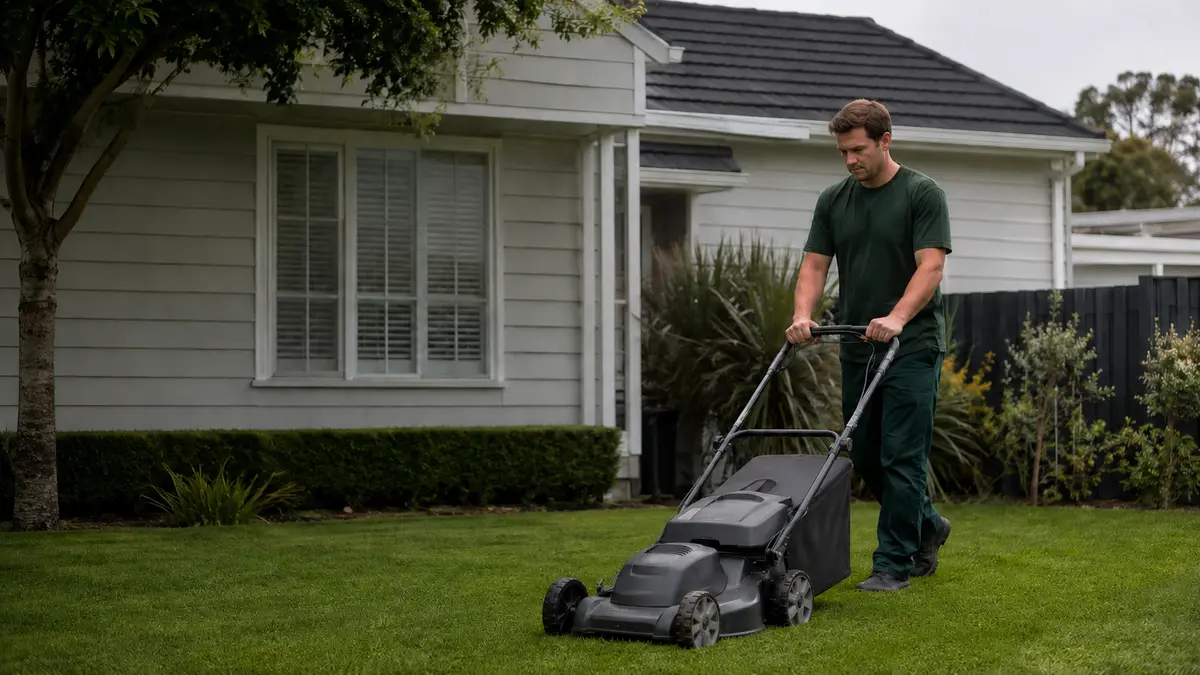
A growth-based answer for Auckland and the rest of New Zealand, including wet weeks, dry summers and winter slow-downs. Use this guide as a practical starting point, then adjust for your region, property and the current condition of the site.
There is no honest all-year frequency
A weekly visit can be suitable during vigorous spring growth, but excessive during drought or winter dormancy. The right interval is the time it takes the grass to grow enough that mowing removes no more than about one-third of the leaf blade.
That rule protects leaf area and reduces stress. If the lawn has become very long, lower it over two or more visits rather than taking it directly to the finished height in one severe cut.
Typical patterns by season
Use these ranges only as a planning guide. Warm northern regions, irrigated lawns and fertile sites may grow faster; exposed or dry lawns may grow far more slowly.
- Spring: often every 7–14 days during active growth
- Summer: roughly every 1–3 weeks depending on moisture
- Autumn: commonly every 2–3 weeks as growth slows
- Winter: as needed, sometimes several weeks apart
Conditions that should delay mowing
Delay a cut when the surface is waterlogged, when wheels sink or smear the soil, during extreme heat, or when drought-stressed grass is not actively growing. Wet leaf can also clump, block the mower and create an uneven finish.
On a busy rental or commercial site, presentation still matters. In low-growth periods, edging, leaf clearing, weeds and litter may need attention even when the lawn does not.
Choose a service interval you can adjust
A useful maintenance agreement allows seasonal changes rather than promising the same action every visit. Ask how overgrowth, rain delays and green-waste volumes are handled, and make sure the maintained areas are recorded clearly.
 9 min read
  10 min read