MOW. TIDY. CLEAR.
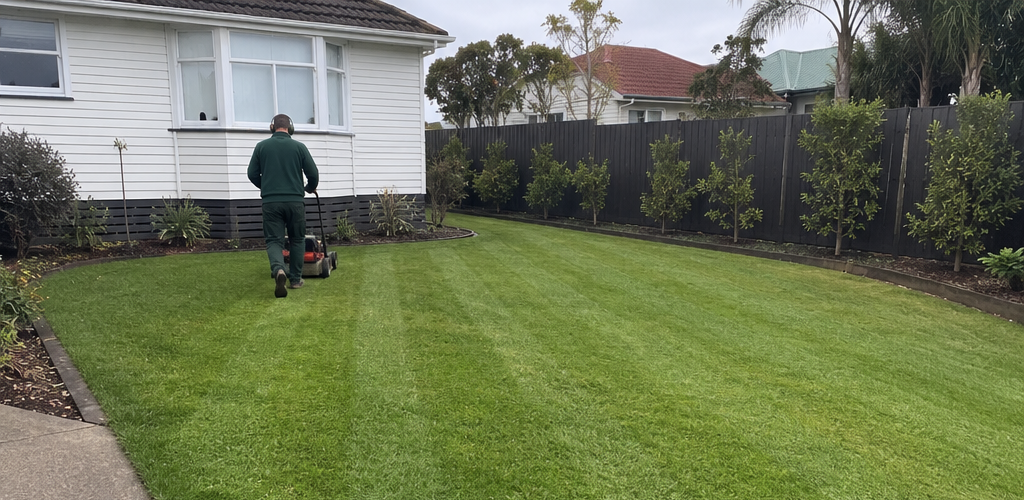
How to choose a sensible cutting height for ryegrass, fescue, shaded areas and dry summer conditions. Use this guide as a practical starting point, then adjust for your region, property and the current condition of the site.
Start with the grass and the site
Many New Zealand home lawns contain cool-season grasses such as ryegrass and fescue, sometimes mixed with browntop or other species. A moderate finished height—often around 40–60 mm—is a practical starting range for an ordinary home lawn, but it is not a universal specification.
Fine ornamental turf maintained with specialised equipment can be shorter. Shaded, dry, worn or coarse lawns usually benefit from more leaf. If you do not know the species, prioritise density and colour over chasing the lowest possible cut.
Why very short mowing often backfires
Scalping removes the leaf area the plant uses to make energy. It also exposes soil to sun, increases moisture loss and creates gaps where weeds can establish. On uneven ground, a low deck can strike high spots even when the average height looks acceptable.
Repeatedly short mowing encourages shallow stress rather than a stronger lawn. The immediate pale colour is the lower stem tissue being exposed, not a sign that the turf has been cleaned more thoroughly.
Adjust for season and conditions
Keep the lawn slightly higher during hot, dry weather and in shade. In spring, lower height gradually if the grass is dense and actively growing. Never remove a large percentage of the leaf in one pass simply because the lawn missed a scheduled cut.
Check the actual deck height on a hard, level surface; the numbers on an adjustment lever do not always equal millimetres. Sharp blades matter just as much because torn tips lose moisture and turn brown.
A simple visual test
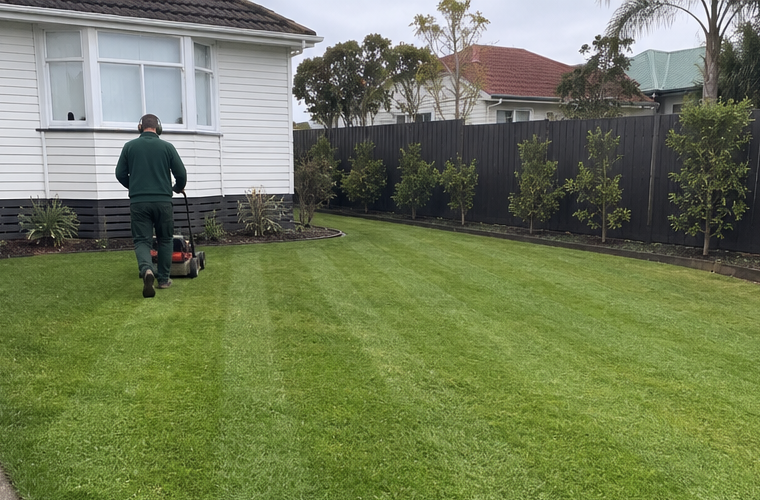
After mowing, the lawn should remain green rather than looking white, straw-coloured or shredded. You should see upright, cleanly cut blades, limited clumping and no bare arcs on high spots.
 10 min read
  9 min read