MOW. TIDY. CLEAR.
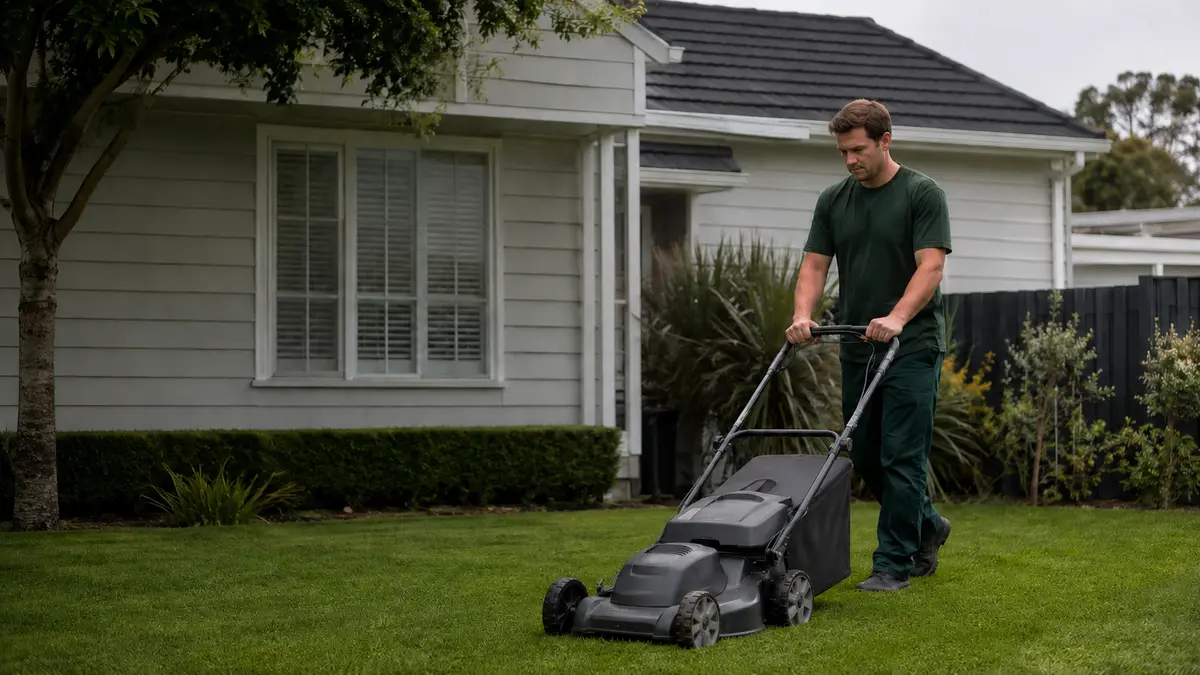
Bring a winter-worn lawn back into active growth without scalping, overfeeding or compacting wet ground. Use this guide as a practical starting point, then adjust for your region, property and the current condition of the site.
Wait for real growth
A few warm days do not mean the whole lawn is ready for aggressive renovation. Look for consistent new leaf, improving soil temperature and a surface firm enough for equipment. Frost-prone regions may start weeks later than northern coastal areas.
Reset the mower before the lawn
Sharpen blades, clean the deck, check wheel height and begin with a conservative cut. Lower the height over later visits only if the turf is dense and healthy. Remove leaves and sticks before mowing so they do not damage equipment or hide obstacles.
Open compacted and thin areas
Aerate genuine compaction when soil is moist, not sticky. Overseed bare areas, repair levels and keep new seed watered. Avoid unnecessary dethatching: a small thatch layer is normal, while vigorous scarifying can damage a weak lawn.
Build a sustainable spring rhythm
Increase mowing frequency as growth accelerates, control weeds after identification and label checks, and plan irrigation before the first dry spell. The goal is dense turf entering summer, not a burst of soft growth that needs constant rescue.
 7 min read
  8 min read
  10 min read